

Post Production
If an interview sounds as though it was recorded inside a microwave, the lighting won’t get much credit. Clear dialogue, well-chosen music and a careful mix deserve attention while there’s still time to do something about them.
You can spend hours getting an interview to look right, then lose the whole thing to a microphone rubbing against a shirt. Sound needs the same attention as the picture, right from the start.
It’s also one of the most enjoyable parts of making a film. Music can change the feeling of a scene completely. A small sound can draw your attention to something you barely noticed in the picture. But first, you need to be able to hear the person talking.
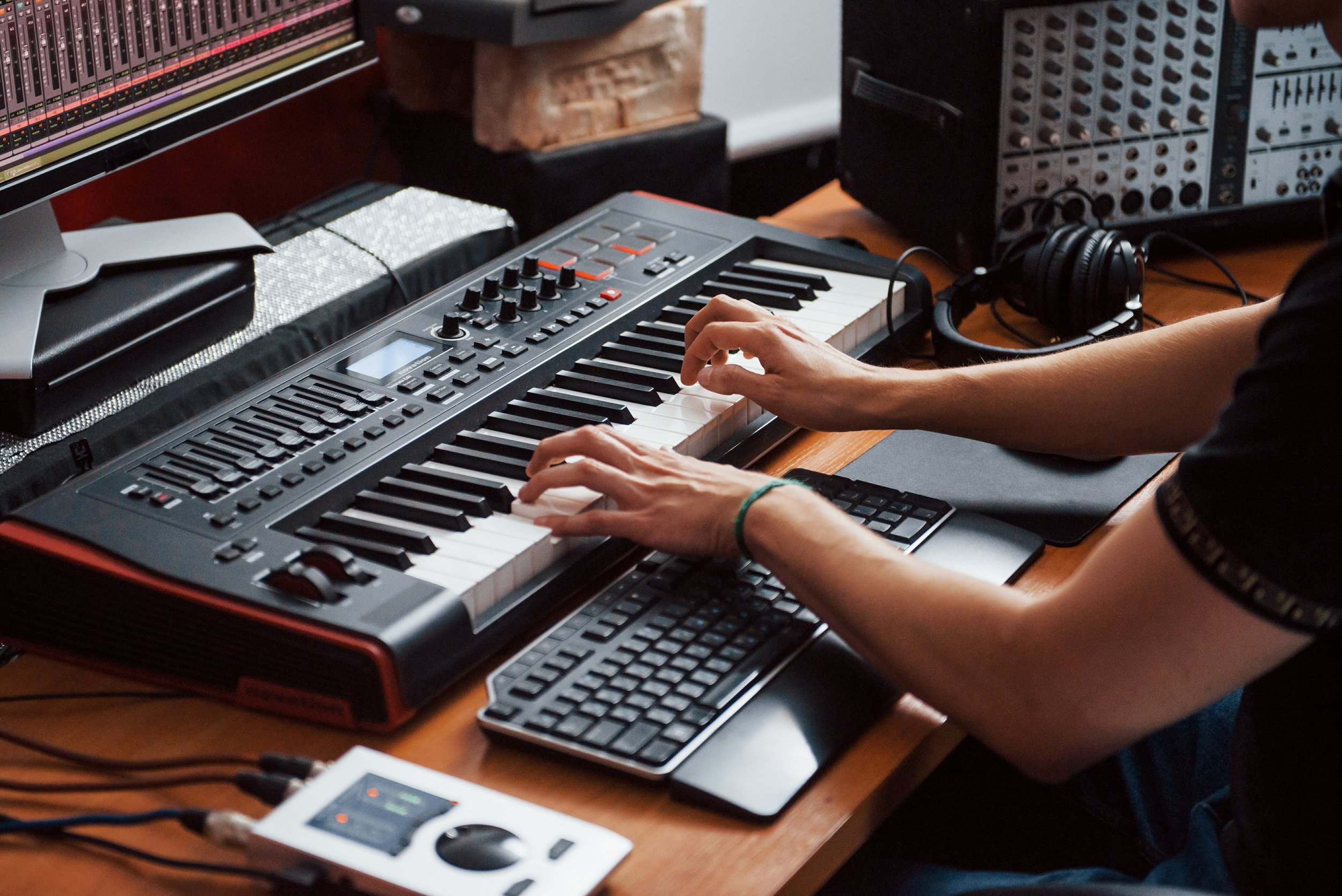
Music deserves care in the edit, and enough space for the dialogue to stay clear.
Before you press record
For an interview, the microphone needs to suit the room, the speaker and the shot. That might mean a small microphone clipped to clothing, a boom just out of frame, or both. Position it properly and listen to a test recording before getting into the questions.
Keep listening during the take, too. Clothing moves, air conditioning switches on and traffic passes. Catch a problem while everyone is still there and you can usually do something about it.
Noise reduction can help in the edit, but there are limits. Moving a microphone or finding a quieter room can save hours of trying to rescue a recording later.
While you’re there, record some of the room on its own. That background sound helps the edit feel continuous when you cut between takes. Small details matter as well: footsteps, a door closing, the sound of the work being done. Without them, a scene can feel oddly empty.
Extra sound effects can help, particularly in product films and animation. The click of a mechanism or the weight of an impact can make the picture much more satisfying. You don’t need a whoosh on every cut, though.
Sometimes a pause or a moment of quiet is exactly what the scene needs.
Give the music room
A track can sound brilliant on its own and be completely wrong under an interview. Listen to the rhythm, the instruments and where the music gets busy. Does it support what’s being said, or keep pulling your attention away?
The track may need a different starting point, a few careful edits or changes in volume around the voice. Getting those details right can do more for the film than swapping it for another supposedly epic piece of music.
The final mix brings the voice, background sound and music together. Levels, unwanted noise and tone all need attention, so the film feels consistent from one scene to the next.
Then listen away from the edit suite. Try headphones and a phone speaker. If you’re reaching for the volume whenever someone starts talking, it needs another pass.
<- ALL UPDATES