

Pre Production
You don’t need to send a crew abroad for every establishing shot. Stock footage can fill a useful gap in a corporate film, provided the material fits the story, matches the edit and is licensed for the planned use.
You don’t need to send a crew to Tokyo for every establishing shot. Sometimes someone has already filmed the view you need, and it’s available from a stock library.
That can be useful when the brief needs a location you can’t reach, or when the time and budget are already committed to the people and material that need to be filmed for the project.
A stock shot still has to do a job in the story. There’s little point saving money on footage that looks lovely and explains nothing. Start with the gap in the edit, then look for something that fills it.
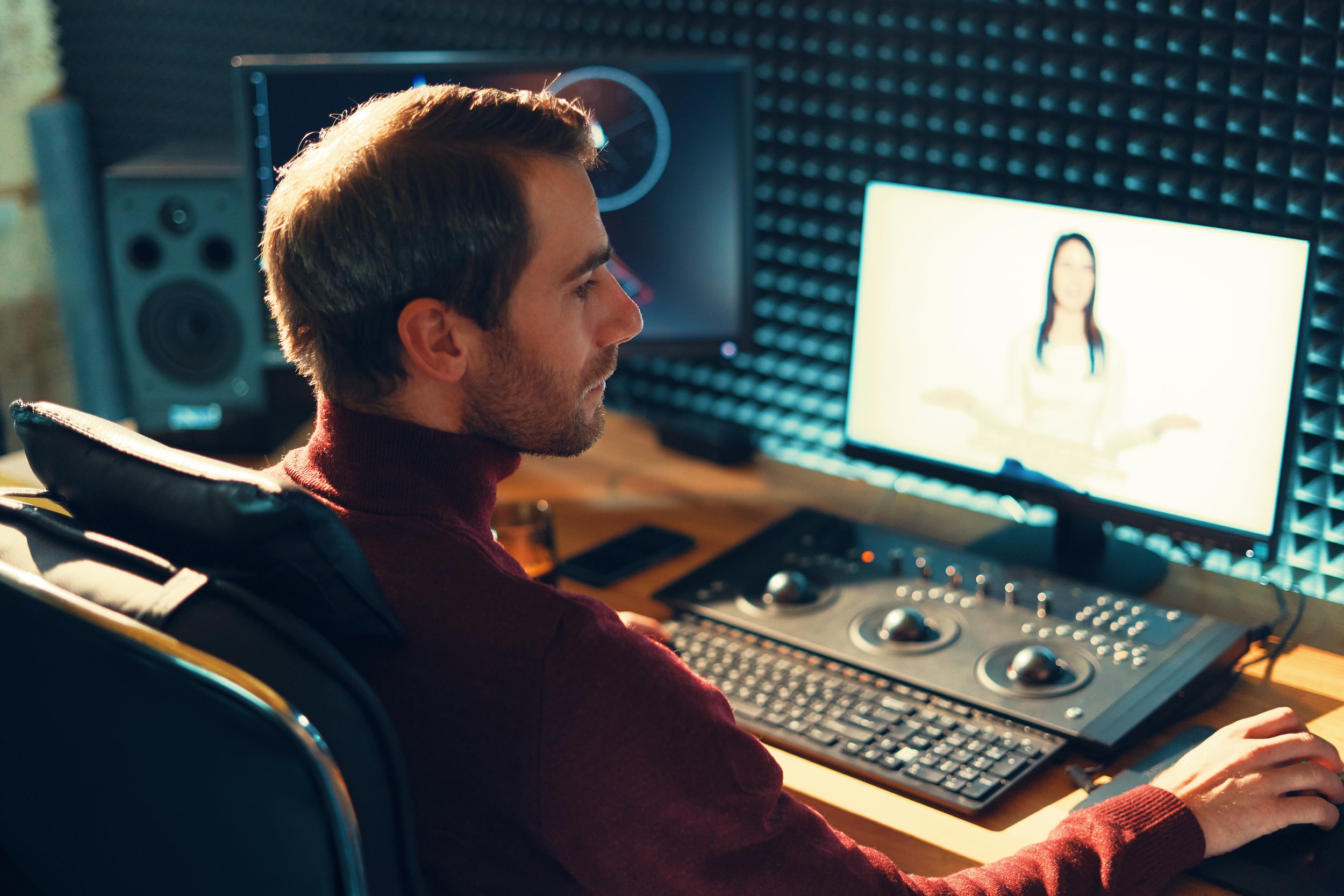
The real test for a stock shot happens in the edit, alongside the footage it needs to match.
Use the library for the shot you need
Stock libraries can offer a wide range of locations and subjects: a sunrise over Tokyo, an office in Berlin, a manufacturing process or an aerial view. That gives a producer options without arranging a separate shoot for each sequence.
It can also help when a deadline leaves little room to wait for weather, travel or availability. You can look for suitable coverage while the edit is taking shape, rather than delaying the whole film for one missing shot.
Keep the claims in the film honest. A stock skyline can establish a place or illustrate a subject. It shouldn’t imply that a generic office is your office, or that another company’s manufacturing line is yours. Use footage of the actual business where the viewer needs to see what it does.
Make it belong in the edit
The challenge is finding material that sits comfortably with your original footage. Look at the way it’s lit, how the camera moves and the pace of the action. A slick slow-motion shot may feel very odd between two brisk pieces of interview coverage.
Colour grading can help bring material together, but it can’t solve every difference. Check the framing and resolution too, especially if the finished film needs different crops for social channels.
Build the sequence and watch it in context before getting attached to the shot. The library preview may be impressive on its own; the useful test is whether it feels right in your film. If it keeps drawing attention to itself, keep looking.
Read the licence for the footage and check it against the planned use. Libraries have different terms, and the licence is part of the production decision. Keep a record of where the asset came from and how it was licensed, so the information is available when the film is reused.
For example, Envato Elements registers items for a specific project use. A licence for one production should not be assumed to cover another. Other services may work differently, so check the terms of the library you’re actually using.
Stock can save commissioning a separate shot, but the saving depends on what you need and what the licence costs. Leave time to choose carefully. The best find is the one you can use without the viewer wondering why an entirely different film has briefly wandered into yours.
<- ALL UPDATES